

Are Diamonds Really Rare?
Diamonds have long been associated with rarity. For decades, their perceived scarcity has been one of the main reasons behind their high value and status in fine jewelry. But when rarity is examined beyond tradition and marketing, the reality is more complex.
So the question is worth asking: are diamonds actually rare?
The Difference Between Natural Rarity and Market Rarity
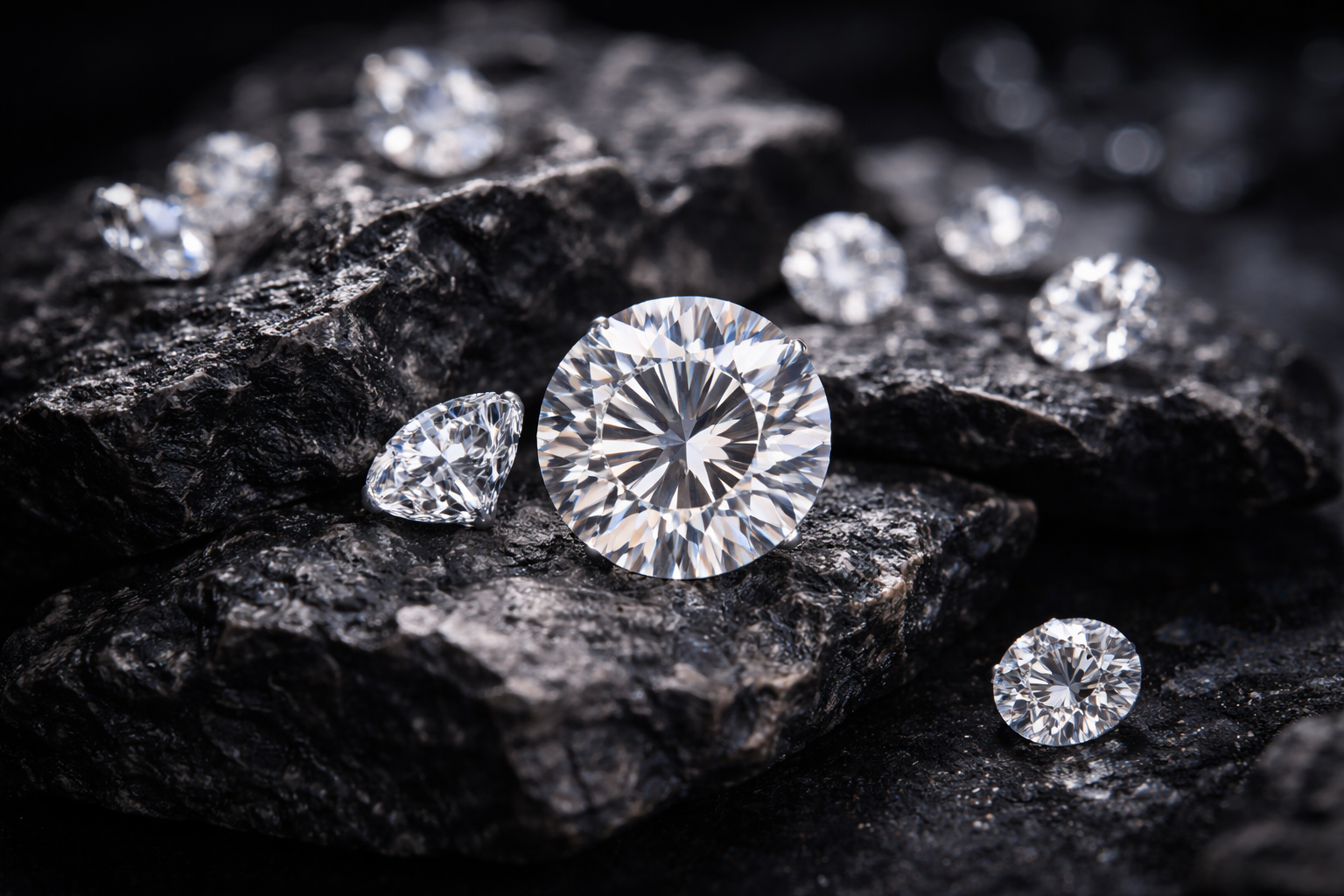
Diamonds are not rare in the way many people believe. While they are formed under extreme geological conditions, diamonds are found in significant quantities across the world. Large-scale mining operations extract millions of carats each year.
What creates the perception of rarity is not geological scarcity — it is controlled market supply.
For much of modern history, diamond distribution has been tightly regulated. By releasing stones gradually rather than all at once, the market maintains an appearance of limited availability, even when supply is abundant.
How Diamond Supply Is Managed
Unlike most natural resources, diamonds are not sold freely based on extraction volume. Instead, supply is carefully managed through centralized distribution systems, long-term stockpiling, and selective release.
This approach stabilizes prices and preserves the perception of exclusivity. It also explains why diamond prices remain high even when production levels are strong.
In short, diamonds are managed commodities, not naturally scarce materials.
Lab Diamonds and the Shift in Availability
The introduction of lab-grown diamonds has further challenged the idea of rarity. Lab diamonds are chemically and structurally identical to natural diamonds, yet they can be produced on demand.
As lab-grown diamond production scales, the notion of diamond scarcity becomes even less convincing. When a gemstone can be created in controlled environments at predictable volumes, rarity becomes a question of branding rather than availability.
Rarity vs Value
True rarity does not automatically equal value. Value is determined by a combination of factors:
-
Performance
-
Durability
-
Consistency
-
Demand
-
Cultural perception
Many materials that are genuinely rare lack durability or practical use. Conversely, some widely available materials deliver exceptional performance and long-term value.
In modern fine jewelry, performance is increasingly valued over origin.
Why Perception Still Matters
Despite changing realities, diamonds retain strong cultural significance. Tradition, symbolism, and emotional associations continue to influence purchasing decisions.
However, as consumer awareness grows, more buyers are questioning long-held assumptions. The conversation is shifting from “How rare is it?” to “How well does it perform?”
A Modern Perspective on Rarity
In today’s jewelry landscape, rarity alone is no longer enough. Precision, consistency, and measurable quality are becoming more important than geological origin.
Diamonds are iconic — but their rarity is largely a constructed narrative rather than a natural limitation.
Understanding this distinction allows buyers to make decisions based on clarity, performance, and intention rather than assumption.
The Takeaway
Diamonds are valuable, iconic, and deeply rooted in tradition. But they are not as rare as many believe.
In a modern context, luxury is less about scarcity and more about execution. When rarity is examined objectively, it becomes clear that value is evolving beyond old definitions.





Leave a comment
This site is protected by hCaptcha and the hCaptcha Privacy Policy and Terms of Service apply.